
Warning: There will be depictions of human remains in this article. Some as drawings or illustrations, others as photographs of skulls.
There’s been a lot of chatter on social media about so-called “elongated skulls” again lately, so I thought it was a good time to do an updated article and include some of the newest information on the topic.
I’ve written pretty extensively on the topic of artificial cranial modification (ACM) in the past 20 years and I’ll list those articles at the bottom of this one for reference and throughout as appropriate. For those not familiar with ACM as a human practice or if you only know of it from pseudoarchaeological sources, I’ll give an overview and then go into what’s new in the last 10 years. Finally, I’ll discuss the major pseudoarchaeological claims that surround this human phenomenon and why they’re probably not true.
What is Artificial Cranial Modification (ACM)?
Broadly speaking, this is the intentional or even accidental reshaping of the human skull during infancy when cranial sutures are soft, plastic, and un-fused. It happened on every inhabited continent throughout human history and prehistory. Unintentionally, it can occur when an infant is consistently strapped to a cradle-board, with the head bound to prevent damage to the neck as the mother works. Or from consistently sleeping on a hard surface, such as a cave floor. Cradle boarding usually results in occipital flattening at the back of the skull, leaving the frontal bone unaffected, though fronto-occipital flattening also occurred in certain types of cradle-boards that involved compression by board or cloth to both the front and back of the skull at the same time.
Intentionally, ACM generally creates skull shapes that include fronto-occipital (tabular) or circumferential (annular). The first is characterized by a flattening of the skull from both the front and rear, forcing lateral growth to the sides and across the parietal bones. This parietal bossing results in a broader skull. The second is characterized by restricted lateral expansion, forcing cranial growth backward or upward, producing an elongated or conical appearance.
There are nuances of these two broader categories that depend on vectors of compression relative to the base of the skull.
- Parallel Fronto-Occipital (Tabular Oblique) – The occipital plane is compressed obliquely which causes the cranial vault to slope back and up into an elongated shape.
- Fronto-Vertical-Occipital (Tabular Erect) – The occipital plan is flattened but upright as compression is applied vertically/perpendicularly.
- Annular Oblique – Circumferential wrapping tilts the cranial vault backward.
- Annular Erect – Circumferential wrapping directs the growth vertically, creating conical vault.
- Bi-lobed – Two distinct lateral lobes created by strapping in a fronto-occipital method but adding an additional strap along the sagittal suture.
- Bi-lobate – A central coast Peruvian variant compressed top to bottom as well as front to back, creating a pronounced set of parietal-occipital lobes.
- Pseudo Annular – Combines tabular compression with post-lambdoid bands.
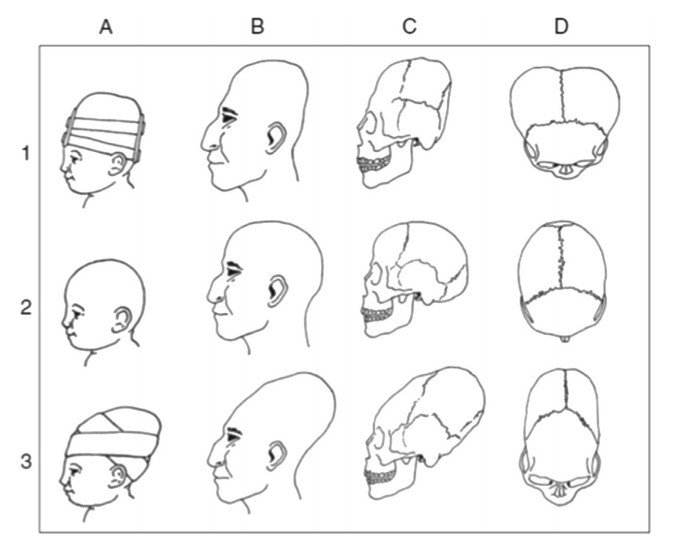
From O’Brien and Stanley 2013.
Trephination: Technically ACM
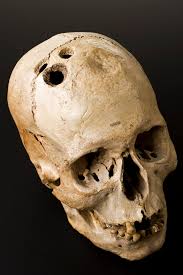
Technically, there are other forms of ACM beyond cranial shaping. This includes trephination and dental modifications. I’ll save dental modifications for another time, but it’s worth mentioning the practice of trephination here since it was not at all uncommon among the same populations that were shaping the skulls of their infants. It’s also useful to note that the words “trephination” and “trepanation” are generally synonymous, however some writers lean toward the former as the surgical procedure that removes bone and the latter as referring to perforating the skull with an instrument.
To get a sense of just how common the practice was in pre-contact South America, here are some figures.
In a sample of 273 relatively complete skulls from Inca-Period burial caves near Cuzco (Paucarcancha, Patallacta, Torontoy), 17% (47 skulls) were trepanned at least once with 17 of them showing evidence of being performed to treat a skull fracture (Verano 2003). In a study looking at 66 skulls from 11 burials in the Cuzco region separate from the first case, 109 total trephinations were documented. Bone regrowth indicated that 83% of them survived the process (Andrushko and Verano 2008). And in the central Peruvian Highlands at Huarochiri, trephination was documented as a common practice among skeletal remains recovered there and also frequently coincided with skull fractures (Verano 2003).
Primary Surgical Techniques
In ancient South America (i.e. Cuzco, Peru), the most common technique was scraping the cranial vault or using circular cutting motions to thin and ultimately perforate the bone. At times, the cranial vault was scraped in four intersecting directions to cut out a small rectangle, and a piece of the skull was removed. These scrapes and cuts were generally done with obsidian or chert, both of which can hold a very sharp edge. Perhaps both were used for different purposes since obsidian can be sharpened to scalpel-like edges to cut away flesh and chert can be used to create hard, sharp chisels and cutting instruments that won’t easily dull while cutting bone.
Why do it in the first place?
While there were early researchers like Paul Broca that hypothesized that trephination was driven by superstition, supernatural appeasement, or to release spirits and demons, and others thought it to serve as an “exorcism” for severe abnormal behaviors. However, bioarchaeologists have long emphasized that no clear physical or archaeological evidence exists in the material record to support these sorts of explanations.
Instead, evidence-based hypotheses held that trephination was performed for therapeutic and medical purposes, either real or perceived. But definitely with an intent to treat physical trauma and head injuries. As mentioned earlier, trephination correlating to cranial fractures is not uncommon in the archaeological record.
What’s New
Neanderthals and Shanidar Caves 1 and 5
Originally, I mentioned that Erik Trinkhaus (1982) noted evidence of ACM dating back about 45,000 years to Neanderthals in Shanidar 1 and 5. I don’t think I implied that deformation of the subjects in these caves was intentional, and I’ve pretty much always assumed it was due to sleeping on the cave floor, but some new research suggests this is taphonomic or even natural variation rather than intentional (Meikle 1992; Zhang 2019).
Oldest and Earliest?
I definitely pointed out in my earliest article on ACM that the earliest known intentional instances of ACM was at around 11,000 BCE in Australia. New research at the Houtaomuga site in Jilin, China, however, does appear to have one of the oldest known sites (even challenging Kow Swamp) and definitely the longest continuous practice of ACM which spans at between 12,000-7,000 years BP. But the Kow Swamp and Coobool Creek sites still offer some one-off specimens that go back 13,500-to 12,000 BP.
Jericho Plastered Skulls
I originally cited Flecher et al. (2008) that described the in vivo modifications of a Neolithic plastered skull from Jericho in the British Museum. This would imply that from the time a person was a toddler, there may have been an intent to achieve an ideal appearance, perhaps in veneration for an ancestor. This individual may even have been chosen for skull decoration (with plaster, cowrie shells, etc.) at birth. Then again we really don’t know the prevalence of ACM among the Neolithic populations contemporary to Jericho. But recent research confirms that the crania from PPNB Jericho were intentionally modified (Sparks et al. eds 2020), confirming the earlier work of Fletcher (2008).
Assumptions of Elite Modifications Among the Inca
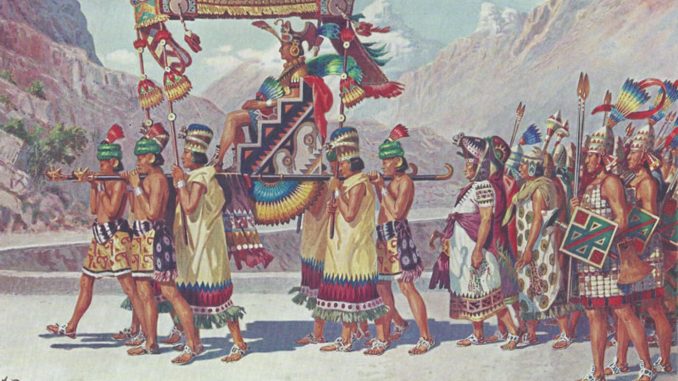
My earliest references when I first started looking into ACM almost 20 years ago explored the idea that Andean elites, particularly Inca royalty, modified their skulls into elongated conical shapes to show privilege and rank (see Hoshower, Buikstra et al. 1995). More recent research has used more comprehensive data–419 crania across 10 sites–and determined that Inca elites in Cuzco city sites did not generally modify their skulls. In fact, nearly 80% were unmodified (Andrushko 2020). Not shaping their heads appears to have been a conscious decision as a visual indicator of Inca ethnic identity. Modified crania of the surrounding region represented the Mitmaqkuna–those groups of families and communities that the Inca Empire forcefully moved to new regions. It’s even possible that the Inca descended from those that did not modify their skulls as there is a high frequency of un-modified skulls represented before Inca rule and a large variety of types during it among the non-elites and Mitmaqkuna.
European Migration
In 2019, I discussed headshaping as it relates to the Eurasian Migration Period and how models at the time suggested that the practice of ACM around the 4th and 7th centuries CE was probably due to the influence of the Huns. Mayall and Pilbrow (2019) noted that of the various styles of ACM in Eastern Europe (Hungry, Georgia, Germany…) and determined that these practices weren’t local, rather they were imported from the Huns and used as a way to maintain social identity and social boundaries. More recently, aDNA studies have shown that 5th century skeletal remains in Croatia showed that different types of ACM in the same burial pit correspond directly to distinct ancestral origins (East Asian, Near Eastern, and West Eurasian) (Fernandes et al. 2019). Studies in Bavaria also demonstrated that ACM present in medieval European skulls that belonged almost exclusively to first-generation female immigrants. It could all be random, or it could be part of a bigger pattern of group membership.
Some of the Pseudoarchaeological Claims About ACM
Missing Cranial Sutures
A recurring claim is that elongated skulls possess an abnormal anatomical structure featuring only a single parietal bone and completely lacking a sagittal suture. In human anatomy, the sagittal suture often fuses and obliterates naturally with age, or fuses prematurely due to the mechanical pressures applied during childhood head binding (Parmar et al. 2012). This is a normal anatomical feature. It’s not a mystery. At all.
Foramen Magnum Out of Place
This is a claim I’ve read mostly from Brien Foerster, but significance-junkies and mystery-mongers are quick to hop on it because it sounds science-like. They’re using scientific, anatomical terms after all. They’ll claim an elongated skull’s foramen magnum is too far to the back of the head and that the foramen ovale are missing. Neither is true and can often be seen in the very photographs the claimant is showing. Rather than compare the foramen magnum to the back of the skull, compare it instead to the basal portion of the occipital bone that resides between the vomer (roughly where the roof of the mouth starts) and the foramen magnum itself. In other words, measure the big hole where the spine goes from the teeth side instead of the backside. It’s in the right spot.
Impossible Cranial Capacity and Weight
One of the most common, but completely bogus, claims is that “elongated skulls are 25-30% larger” and “60% heavier.” You’ll see this claim over and over and it seems like a fair assessment, particularly if you’ve never held one of these skulls in person. The shape is deceptive. Never does the person making the claim show the work. They say bigger and heavier by using percentages that make it science-sounding without showing the science to prove it. This, my friends, is pseudoscience.
In every single skull that’s ever been measured, the volume and mass are consistent with normal human variation (950 cc to 2,000 cc). ACM redistributes bone material without increasing either mass or volume. The cranial walls can become thinner or thicker, depending on the shaping process, but no mass is added.
Exaggerated Facial Features
These claims are usually that the eye sockets, noses, and jaws of modified skulls exceed normal human limits. The reality is facial prognathism and slight changes to the orbital angles are standard compensatory growth responses caused by fronto-occipital vault compression. The amount protrusion of of the maxilla and face in general can be noticeable among those that practice even moderate degrees of deformation.
Non-Human or Exotic DNA
This mostly centers around an attempt by Brien Foerster and L.A. Marzulli, two self-described researchers (with no apparent qualifications or training), who cosplayed as aDNA scientists once to “extract” DNA from one or more skulls in a museum where they are frequently handled. They made little effort to control for the inevitable contamination–a fact of life for genuine researchers of aDNA. Real genetic researchers, experienced in handling aDNA samples, will tell you contamination isn’t a matter of “if,” it’s a matter of “when” and “are you prepared to account for it.”
This is done in a variety of ways, one is by collecting DNA samples from each person handling the artifact and the samples. There was no indication that this standard procedure was done at all. In a nutshell, they sampled the skulls by collecting hair samples and powdered bone collected by drilling into the foramen magnum. As for the labs that processed the DNA, that’s all they’re going to do: process whatever sample you give them in whatever condition it is. Even if it’s compromised. They do not run checks for it unless you supply control samples.
Foerster and Marzulli’s results showed that all the hair contained mtDNA that included the H2A haplogroup, most common in central and western Asia. They report a single mtDNA result from “the most elongated skull” of the samples, which tested as belonging to the T2B haplogroup, which ranges from the British Isles to Saudi Arabia. The highest concentrations are in the latter region. There is no reason to believe the DNA they got results back for was for the individual that once was that skull. So many people have handled these specimens in the decades since they were dug up, looted from the ground in a most undignified and inhuman manner only to be put on display as a curiosity.
Red Hair Proves Non-Native Ancestry
Promoters of pseudoarchaeology will often argue that red hair found on some mummified Peruvian skulls proves that they were non-indigenous, aliens, nephilim, or just pre-Columbian settlers. The fact is that in death, much happens to the body. Cells begin to cool immediately, and bacteria begin the process of decomposition. The chemical reactions and interactions might vary from interment to interment due to humidity, acidity, temperature, air flow, etc. In short, the body itself may act as a bleaching agent for the hair, oxidizing the less hardy eumelanin, leaving intact the more resilient pheomelanin with its red pigmentation (Houk and Siegal 2015).

Also, we all have pheomelanin pigments in our hair. 1-2% of the world’s population are redheads. While the prevalence of red hair in South America during pre-Columbian times is probably less than this, it wasn’t zero. The presence of red hair on a the skeletal remains of a human being in Peru is only evidence of red hair on the remains. Not that the person was always a red head. Or that they came from some distant land. Or that they’re an alien or nephilim, or whatever other crackpot idea someone might invent.
Genetic Elongation and “in utero” Fetuses
Pseudoarchaeological sources argue that certain populations were born naturally with elongated heads rather than shaping them mechanically. They often cite 19th-century drawings of alleged “elongated fetuses” or infant mummies. In reality, these specimens are either normal child mummies modified through infant bindings, misidentified remains, or instances of developmental conditions like scaphocephaly. I challenge anyone claiming otherwise to show the evidence. It simply does not exist.
Extraterrestrial, Nephilim, or Other Non-Human Origins
Promoters of pseudoscience (such as Brien Foerster, L.A. Marzulli, and Lloyd Pye) claim that elongated crania belong to aliens, human-alien hybrids, annunaki, or biblical nephilim giants rather than human beings practicing head binding. They do so at the expense of any data to support their claims. These are people with fantastic ideas about the universe who argue their point by starting with conclusions based on these fantasies. They’ll only see what they want to see and never consider reality. I personally submitted rebuttals to Brien Foerster many years ago on social media when he made pseudoscientific claims. Instead of addressing the data I presented, he responded only by blocking me from the conversation.
The reality is that artificial cranial modification (or sometimes deformation) is not uncommon throughout the world when looking human remains. It is certainly a practice that seems bizarre to us today, if only because of the need to inflict permanent change to an infant that has no say in the matter. Some might say this is not unlike the modern practice of male circumcision for both religious and secular reasons (for Judaism, it serves a physical symbol of obedience to God and a mark of identity; for the secular practitioners it has alleged hygiene and aesthetic benefits). When viewed through the lens of pseudoarchaeology and pseudoscience, ACM becomes the “elongated skulls” of imagined hybrids, aliens, nephilim, or pre-Columbian invaders, all of which erase the indigeneity of descendant communities in places like Peru.
This fascination with replacing their legitimate history with an imagined narrative has real time consequences, most notably weaponizing their economic disadvantages and doing irreparable harm to their own unwritten history. A process of subsistence looting is in place in much of the world, and it’s called huaquerismo in Peru. Antiquities are ripped unceremoniously from the ground and sold for tiny amounts at the digger level only to gain unseemly value to western collectors on the global art market. The demand for the so-called “elongated skulls” finds a similar market. Local huaqueros seem not to understand that the artifacts or human remains they’re trading for meager sums ultimately delegitimize their claims to the land or their own heritage if only by slow and systemic erasure.
And as if it weren’t enough, there now exists in recent years a growing industry of faked artifacts and remains of alien origin! The so-called Alien Mummies or Paracas Mummies have created a very real financial market where human remains combined with those of animals and creative taxidermy are generating enough attention to con buyers out of thousands of dollars for completely manufactured “alien artifacts” very reminiscent of the Burrows Cave and Ica Stones forgeries.
This will be the topic of an upcoming article here on Archaeology Review.
See Also
Artificial Cranial Modification: Head Shaping
Artificial Cranial Modification: Trephination
The Elongated Skulls Mystery Really Isn’t a Mystery at All
Skulls of Indiana Jones: Head-Shaping
Review of Brien Foerster’s ‘Beyond the Black Sea’
Social Identity and Boundaries: Probable Reasons for ACM
Sources and Further Reading
Anton, Susan (1989). Intentional cranial vault deformation and induced changes of the cranial base and face. American Journal of Physical Anthropology 79:253–267.
Blackwood, Beatrice; Danby, P.M. (1955). A study of artificial cranial deformation in New Britain. The Journal of the Royal Anthropological Institute of Great Britain and Ireland, 85 (1/2), 173-191.
Blom, Deborah E. (2005). Embodying borders: human body modification and diversity in Tiwanaku society. Journal of Anthropological Archaeology 24, 1-24.
Burenhult G. (1993). The first humans: human origins and history to 10,000 BC. New York: Harper-Collins.
Cheverud, James M., and James E. Midkiff (1992). Effects of fronto-occipital cranial reshaping on mandibular form. American Journal of Physical Anthropology 87(2):167–171.
Cheverud, James M., Luci A. P. Kohn, Lyle W. Konigsberg, and Steven R. Leigh (1992). Effects of fronto-occipital artificial cranial vault modification on the cranial base and face. American Journal of Physical Anthropology 88(3):323–345.
Fernandes, Daniel, et al. (2019). Cranial Deformation and Genetic Diversity in Three Adolescent Male Juveniles from the Great Migration Period from Osijek, Eastern Croatia. PLoS ONE, 14(8), e0216366.
Fletcher, Alexandra; Pearson, Jessica; and Ambers, Janet (2008). The manipulation of social and physical identity in the Pre-Pottery Neolithic: radiographic evidence for cranial modification at Jericho and its implications for the plastering of skulls. Cambridge Archaeological Journal, 18 (3), 309-325.
Houck, M.M. and Siegel, J.A. (2015) Fundamentals of Forensic Science, 3rd ed. New York: Academic Press
Hole, Frank; Flannery, Kent V.; Neely, James A. (1969). Prehistory and Human Ecology of the Deh Luran Plain. An Early Village Sequence from Khuzistan, Iran. Ann Arbor, MI: University of Michigan Press.
Meiklejohn, A. Agelarakis, P. A. Akkermans, P. E. L. Smith, and R. Solecki (1992) Artificial Cranial Deformation in the Proto-Neolithic and Neolithic Near East and its Possible Origin: Evidence from Four Sites. Paléorient 18(2), 83-97
Milner, Richard (1990). “Cranial Capacity.” The Encyclopedia of Evolution: Humanity’s Search for its Origins. New York: Holt.
Ortner, Donald J (2003). Identification of pathological conditions in human skeletal remains, 2nd edition. San Diego: Academic Press.
Parmar, Pragnesh; Rathod, Gunvanti B. (2012). Determination of Age By Study of Skull Sutures. International Journal of Current Research and Review, 4(20), 127-133.
Rushton, J. P. (1992). Cranial Capacity Related to Sex, Rank, and Race in a Stratified Random Sample of 6,325 U.S. Military Personnel. Intelligence, 16, pp. 401-413.
Tiesler, Vera (2014). The Bioarchaeology of Artificial Cranial Modifications New Approaches to Head Shaping and its Meanings in Pre-Columbian Mesoamerica and Beyond. New York: Springer.
Trinkaus, Erik (1982). Artificial Cranial Deformation in the Shanidar 1 and 5 Neandertals. Current Anthropology, 23 (2), 198-199.
Verano, John W.; Uceda, Santiago; Chapdelaine, Claude; et al. (1999). Modified human skulls from the urban sector of the pyramids of Moche, Northern Peru. Latin American Antiquity, 10(1), 59-70.
Watkins, Trevor (2005). From foragers to complex societies in southwest Asia. In The Human Past. Chris Scarre, (ed.). London: Thames and Hudson, 200-233.
White, Christine (1996). Sutural Effects of Fronto-Occipital Cranial Modification. American Journal of Anthropology, 100, 397-410.

Leave a Reply